



Main Visual of MulanIFF2026: A Willful Illusion
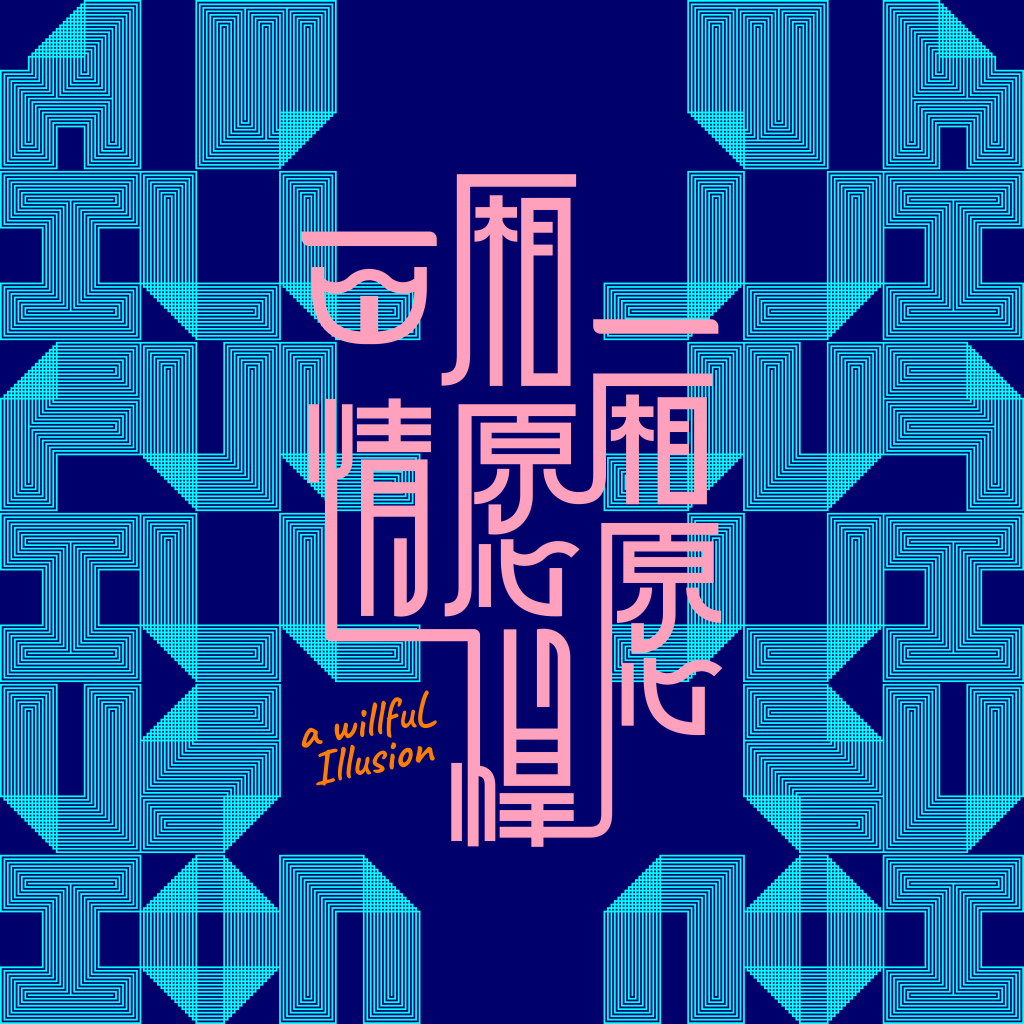
Wishful Thinking (2026)
Gavin OUYANG
In Eastern philosophy, the notion of a willful illusion often stems from a profound attachment. Buddhism posits that all worldly phenomena are impermanent, and clinging to the ephemeral is often one of the fundamental roots of suffering. In the context of existentialism, Albert Camus (1913–1960) argues that humanity possesses an innate, intense desire for order, reason, and meaning in life, yet the universe does not respond to this desire. When a yearning soul collides with a silent universe, an irreconcilable sense of the “Absurd” emerges. A willful illusion is precisely an instinctive, unyielding projection of meaning into the void. Perhaps an illusion itself is false, but a willful illusion is a courageous rebellion. Just as Sisyphus, fully aware that the boulder will eventually roll back down, remains lucid as he chooses, time and again, to push it toward the summit—this is not a meaningless waste of effort, but an active affirmation of his own existence. Many of humanity’s pursuits of love, art, faith, and meaning, on a broader scale, are perhaps all “willful illusions”—acts of knowingly taking up what may ultimately prove impossible.
For the Mulan International Film Festival, “willful illusion” also carries a profound autobiographical resonance. We have long been dedicated to—in the words of ZHU Yilan—discovering and stirring up a new wave where pan-Chinese filmmakers with the potential to become Tier-0 artists, or what she calls Échelon-Formidable, simultaneously put out to the sea. Even when these efforts, in the face of reality, often seem like a futile willful illusion, we nevertheless choose to continue.
If we begin with the literal composition of the Chinese phrase yī xiāng qíng yuàn (一厢情愿), translated here as “willful illusion,” we can evoke the imagery of a hidden female space. In traditional Chinese architecture, xiāng (厢) often refers to secluded spaces such as side chambers or secondary rooms, and is associated with the literary symbolism of the boudoir. Since its inception, Mulan has always directed its deepest attention toward female creators, marginalized groups, and private narratives charged with vitality. The inspiration for this year’s festival main visual comes from the neon works of Tracey Emin (1963–), one of the most influential and pioneering female artists in the contemporary art world. As a key member of the Young British Artists (YBAs) in the 1990s, Emin’s practice developed with a markedly different emphasis from that of peers such as Damien Hirst. While much of the art discourse of the time was concerned with concepts, institutional structures, and the mechanisms through which artworks operated, she instead placed a vulnerable subjectivity at the core of her practice, focusing on visceral, deeply personal, and highly autobiographical narratives. This choice also constituted a radical rebellion against the dominant artistic posture of her time.
Emin’s affinity for neon is closely tied to her unique understanding of the medium’s physical and psychological properties. She has spoken of the pleasure she derives from the light and energy produced when neon and argon gases are electrically excited, and of the emotional power of this “pulsation,” which she believes can even help those suffering from depression. Neon has long been a vital medium in contemporary art for connecting language, concepts, identity, and social experience; artists such as Bruce Nauman, Jenny Holzer, and Glenn Ligon have each explored its diverse expressive possibilities. Emin, however, transforms this material—which possesses both a public and commercial character—into a vehicle for expressing profound private emotions and personal truths. Her handwritten luminous texts respond to the paradigm of the “solid and monumental” long privileged in the art world, allowing ephemeral, fragile, and time-based forms of intimate expression to gain new visibility, thereby claiming authorship over her own narrative. Her artistic exploration offers a guiding light for Mulan’s curatorial mission: to listen, persistently, to the authentic voices of individuals.

GAVIN OUYANG
Co-Founder, MulanIFF