



Announcing 2026 Fountainhead Official Selection – Feature Films
After nearly three months of submissions and ten weeks of deliberation, Mulan International Film Festival is delighted to announce the official feature-film selections for the seventh edition of its Fountainhead Competition!
Founded in 2019, Fountainhead seeks to discover and support emerging directors whose work demonstrates creative originality. Over the years, we have added awards and refined our selection process, developing the programme into a formal competition.
The selected features will compete for the Best New Director Award, chosen by the jury, and the Audience Award, chosen by the audience. Each award carries a prize of CAD $2,000 (RMB ¥10,000), awarded directly to the director.
Mulan may be a young festival, but we have always believed in our choices. We are supported by an audience that shares our deep commitment to young filmmakers: welcoming, open-minded, sincere, and passionate about cinema.
Here are the feature-film selections for the Fountainhead Competition, listed in no particular order.

Another Green World
Director: WANG Kejing
106 min. | 2026 | Fiction | Mandarin | English and Chinese subtitles
North American Premiere
Synopsis
After graduation, JIANG Chao (LONG Zezhi) returns to his hometown Quzhou and hopes to become a teacher. He lives with his sister JIANG Wei (SHEN Shiyu), a tour guide, and brother-in-law ZHANG Qi (JIANG Qilin), a driving school instructor. Chao meets ZHOU Yuan (MU Ruini) at the school when he covers Qi’s shift; in the name of practicing, they drive around the memory-laden Lanke Mountain. Meanwhile, as Wei decides to participate in a tour-guide competition, she finds herself further distant from Qi; the legend of Lanke Mountain also seems to play a part in their relationship. As their adventures unfold, the small town’s landscape starts to transform.
Director
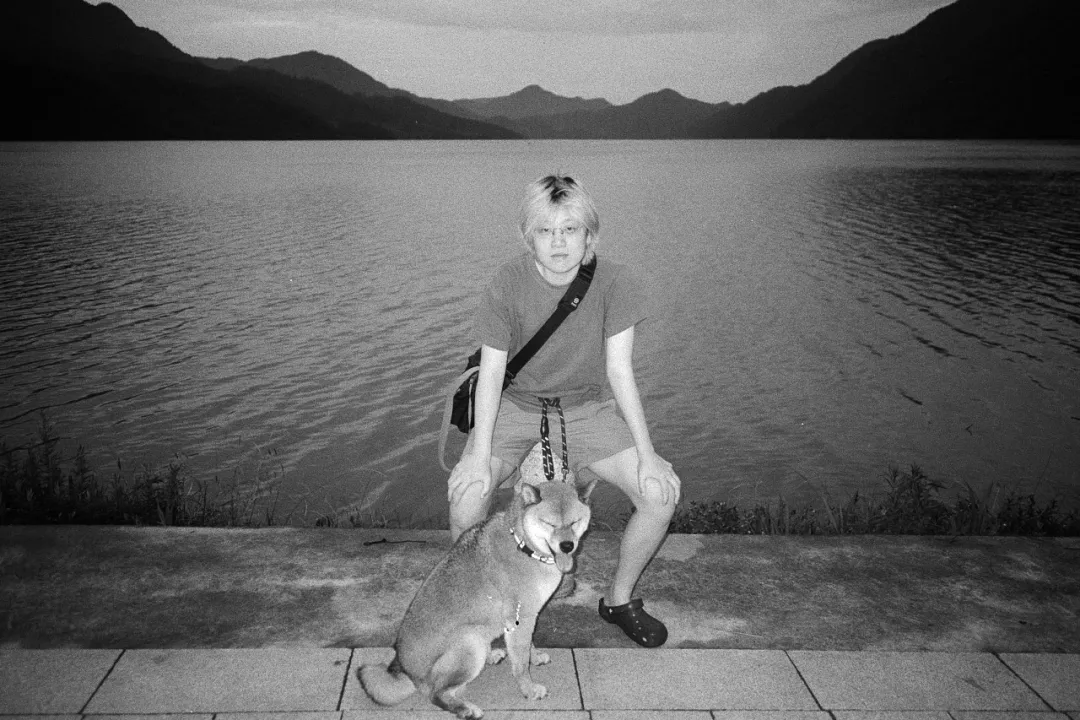
WANG Kejing, born in 1993, graduated from Massachusetts College of Art and Design in 2018 with an MFA in Photography and Related Media. Her documentary short Kayaking premiered at Doclisboa International Film Festival in 2020; narrative short A Walk Down Memory Lane won the Best Narrative Short at Minute Short Film Festival (Chengdu) in 2021. Another Green World, her first feature film, won the Special Jury Prize at Beijing International Film Festival’s Forward Future competition in 2026.
Curatorial Notes
Director WANG Kejing’s debut narrative feature Another Green World takes a young man’s homecoming to teach as the starting point, weaving together the life trajectories of four characters: his elder sister who works as a tour guide, his brother-in-law who works as a driving instructor, and an outsider girl who comes to the town to learn driving. Unfolding with a slowly deepening rhythm, the film depicts the unique spatio-temporal quality of Quzhou, this small southern city: ordinary yet light, tinged with dislocation and trance, brimming with subtle wonder and sudden epiphany. This ambiguous texture of “things change yet nothing truly alters” resonates perfectly with the grand temporal myth of Lanke Mountain — “One day in the mountain, a thousand years pass in the mortal world.” Adopting a non-spectacular perspective, the film captures the hidden poetry within the town’s spaces and builds the film’s distinctive “spatial folds”, which hold the characters’ confusion, respite and spiritual healing.
Another Green World is a tender, sincere and thought-provoking independent Chinese film. It presents richly textured Eastern philosophy and deserves to be seen and interpreted.
— LIU Zhou’anqi

Mei Mei
Director: SU Yu-Chun
102 min. | 2025 | Fiction | Mandarin, Japanese, and English | English subtitles
North American Premiere
Synopsis
Yunmei (WANG Yu-Xuan) is pursuing an acting career in Japan and has finally landed a leading role, only to find herself stumbling over her Japanese lines. Her estranged older sister Huiling (WANG Yu-Ping) is transferred there for work without speaking a word of Japanese, falling back on English whenever words fail her. Her brother-in-law (ASAI Daichi), who knows only a little Japanese, seems the most at ease, wandering around with an easy curiosity. The same Japan becomes three different versions of being elsewhere. Amid a string of everyday mishaps, can they find their way back toward one another?
Director
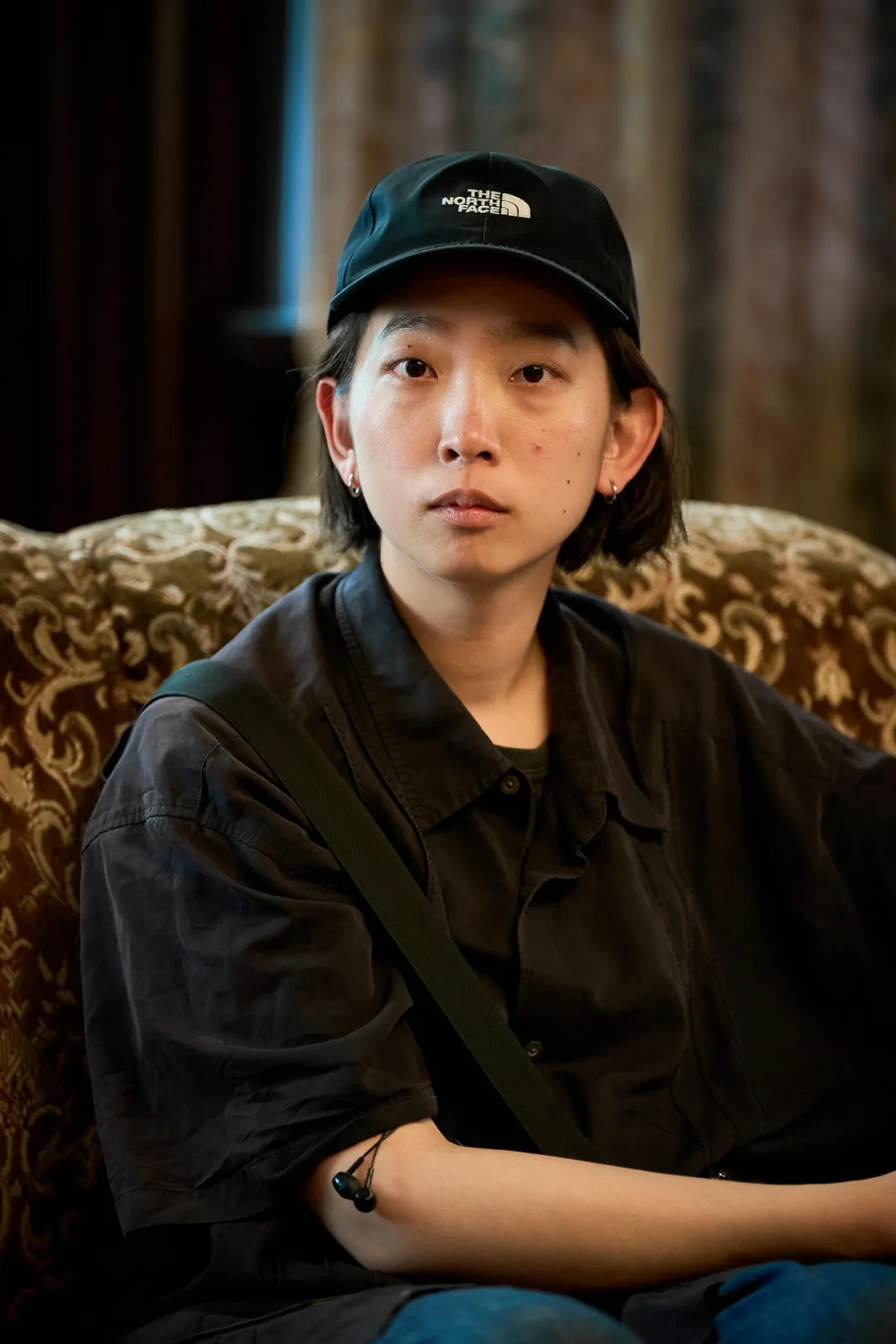
SU Yu-Chun was born in Kaohsiung, Taiwan, in 1994, and studied at National Taiwan University of Arts. Her final project Down the Road (2018) was invited to the Nara International Film Festival. Her subsequent short film It’s Not That Pig’s Problem (2021) won the Special Jury Prize at the Pia Film Festival. She made her commercial feature film debut with Inch Forward (2023) while still studying directing at the Tokyo University of the Arts Graduate School of Film and New Media. In 2024, she was selected as a talent for the Golden Horse Film Academy founded by HOU Hsiao-hsien.
Curatorial Notes
Taiwanese director SU Yu-Chun’s second feature, Mei Mei, follows two estranged sisters, played by real-life sisters WANG Yu-Hsuan and WANG Yu-Ping.
The younger sister Yunmei has been pursuing an acting career in Japan and finally lands a leading role, just as her older sister Huiling is transferred there for work. But one leaves behind the voice recorder she uses to practice her lines, while the other forgets her phone, and they keep blaming each other for not understanding just how busy their lives are. Then there is the brother-in-law, happily entertaining himself on the sidelines. He is the outsider of the three, but somehow also the one who seems to move through Japan with the least difficulty.
Being abroad, they are constantly shifting between their mother tongue and a second language. Even for the younger sister, who speaks fluent Japanese, the barriers of language and culture remain clearly visible. Yet among family members, who should be the closest and who speak the same language, communication does not necessarily come any more easily. This parallel failure of communication, both externally and internally, creates a very interesting contrast. Through these three characters, the director depicts three different façades of living in Japan, with great subtlety and an effortless touch.
— SHEN Wei
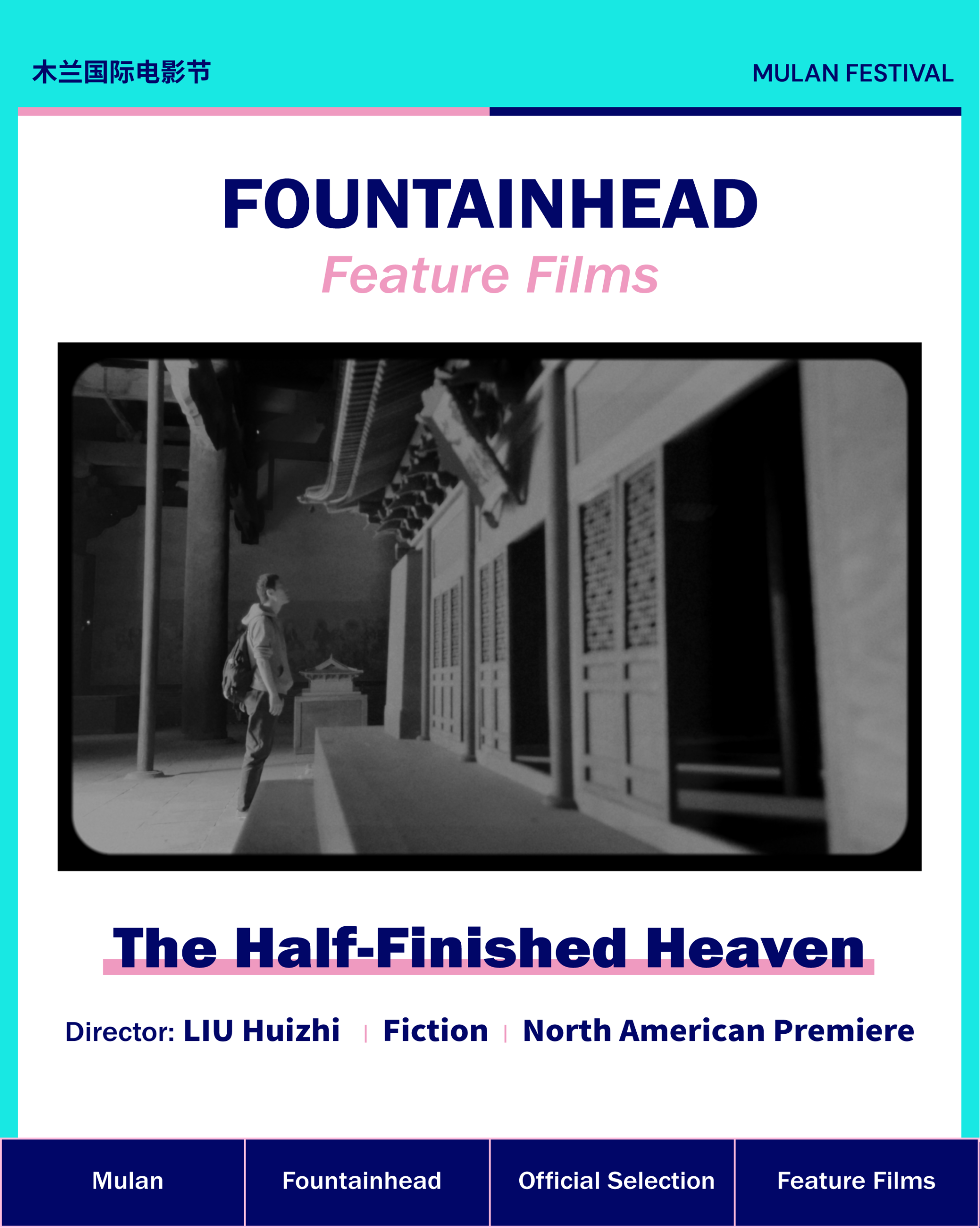
The Half-Finished Heaven
Director: LIU Huizhi
92 min. | 2025 | Fiction | Lunan dialect | English subtitles
North American Premiere
Synopsis
Zao (LIU Huizhi) quits his job to search for ancient Tang-era wooden architecture and vanishes. His father, Lei, devastated, drinks himself into a coma. In his dreams, the ancient city is being rebuilt, while Zao, unemployed, follows his maternal grandfather in crafting paper houses for the dead and becomes obsessed with a manuscript titled The Invisible City. As the family reunites amid unrest, memories and illusions blur––until a new house rises, marked “Auspicious Beam,” and Lei catches the aroma of wine.
Director
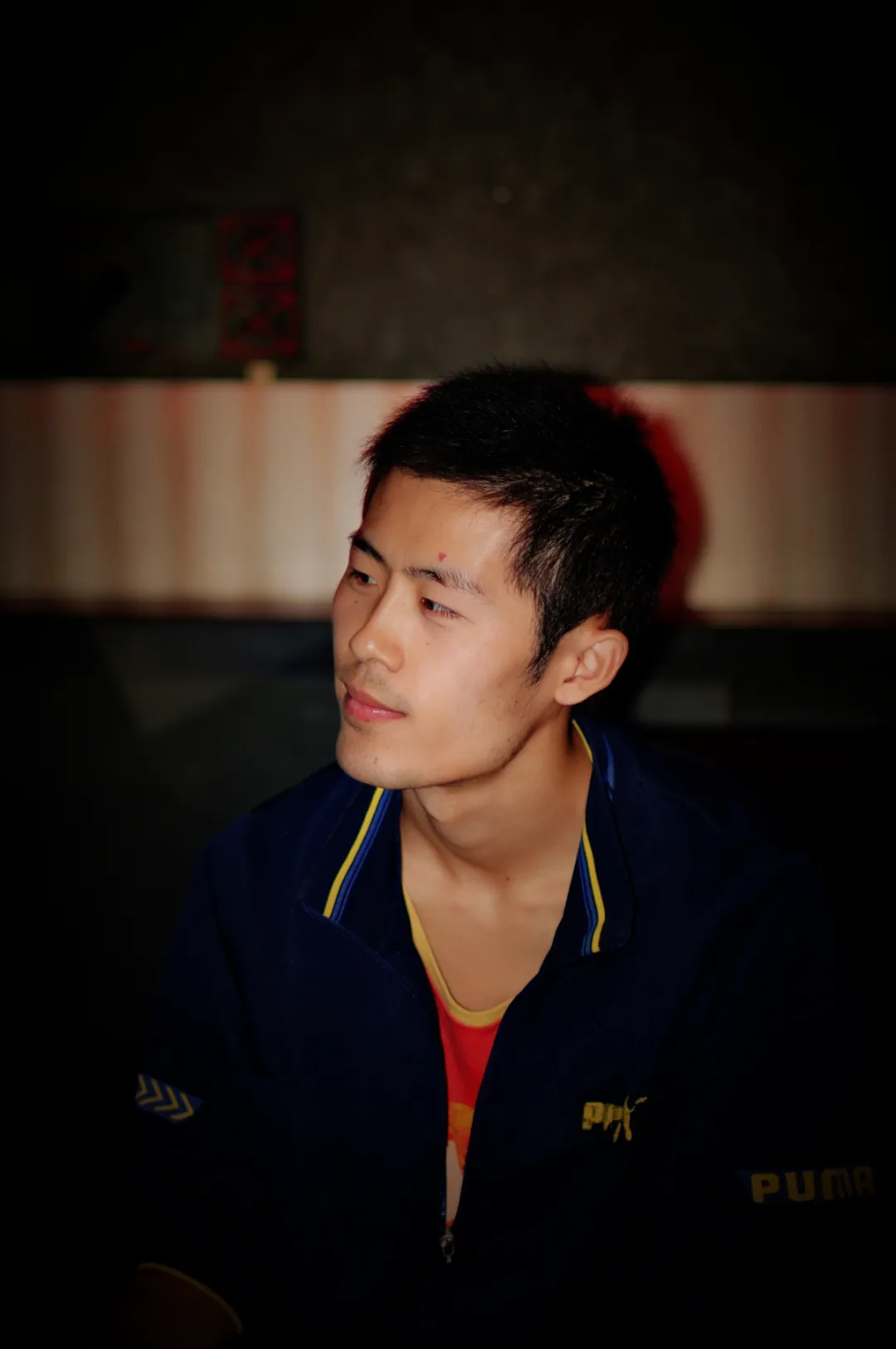
LIU Huizhi is a filmmaker from Juzhou, Shandong, and a graduate of the Literature Department of Beijing Film Academy. Working independently since graduation, his films explore rural spaces, personal memory, and the transformations of contemporary China, often blending reality with dreams and allegory. His mid-length film The King of Beasts Goes Upstairs (2023) was selected for the NEUTRON section of the 7th Beijing International Short Film Festival. His debut feature The Half-Finished Heaven (2025) premiered at the 19th FIRST International Film Festival and was selected for the International Competition at the 37th FIDMarseille.
Curatorial Notes
The Half-Finished Heaven is a 2025 experimental fiction feature written and directed by LIU Huizhi. Set in a village in northern China, it follows a man who, after his son goes missing, drinks himself into a long sleep. In overlapping layers of dreams, an ancient city, village houses, paper houses made for funerary rites, and family memories become entangled; the boundaries between reality and history, the living and the dead, begin to disappear.
Through nonlinear storytelling and images shaped by an Eastern aesthetic, the film explores the relationship between people, land, architecture, and time. A house is both shelter and a vessel for memory and feeling. Paper offerings, timber structures, and film stock—all material things destined to disappear—point together to life’s brevity and the impermanence of existence. The director brings traditional Chinese landscape aesthetics and folk funerary culture into the language of cinema, turning the images themselves into a ritual of memory and death. Perhaps the film’s final question is not how to hold on to everything that has passed, but whether cinema can offer a brief shelter for people and things destined to be forgotten, once houses collapse and lives fade away.
— Louis ZHOU
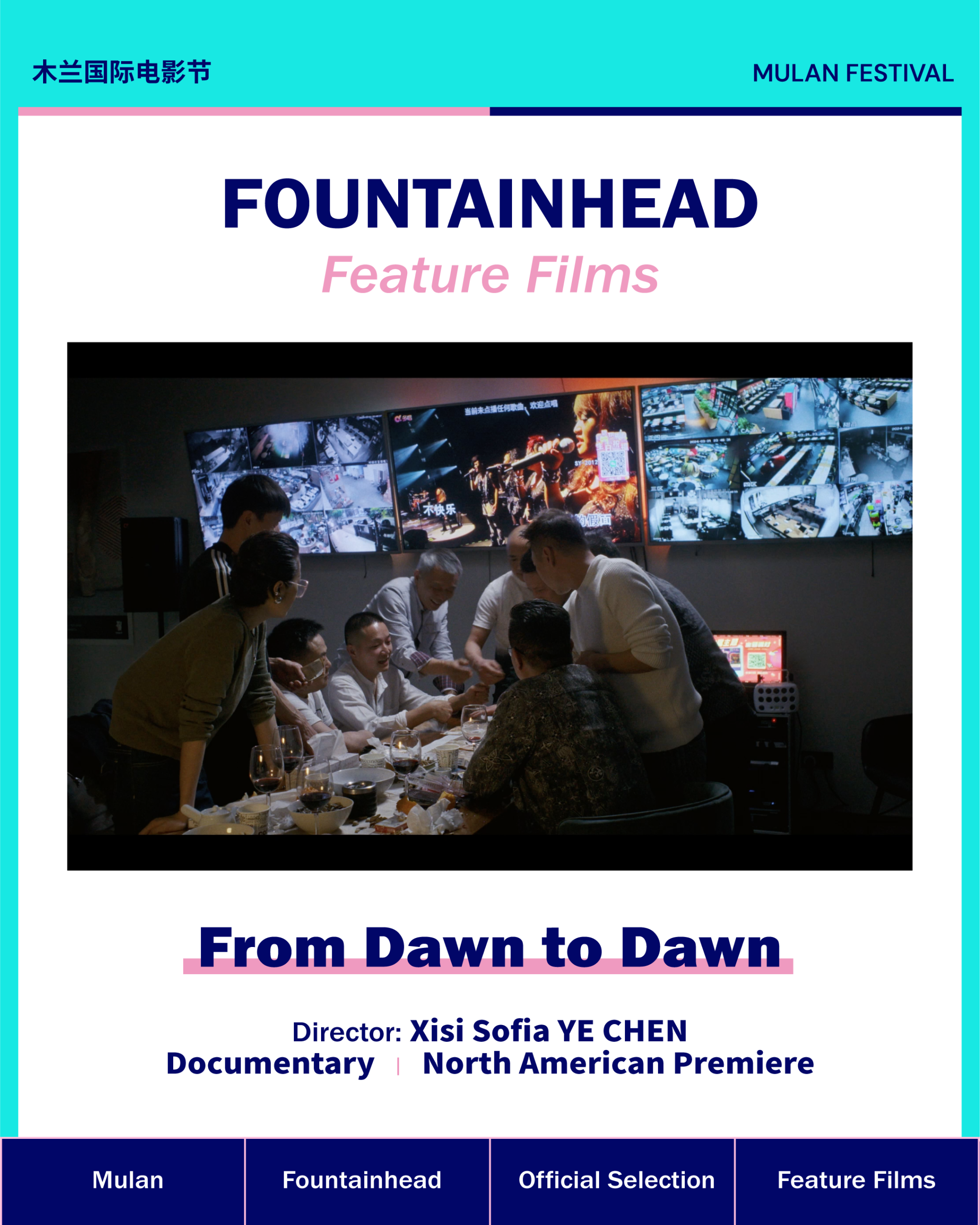
From Dawn to Dawn
Director: Xisi Sofia YE CHEN
94 min. | 2026 | Documentary | Spanish, Mandarin, and Qingtian dialect | English subtitles
North American Premiere
Synopsis
A Wen was born in China; his sister, ten years younger, was born in Spain. Growing up, the siblings often watched Hong Kong gangster films together on VHS. Years later, those stories seemed to spill off the screen and into two very different fates: A Wen was once deeply entangled in Barcelona’s Chinese gang world, while his sister became a filmmaker. She now turns the camera on her brother—today a father and a Buddhist—to look anew at the life he has lived.
Director
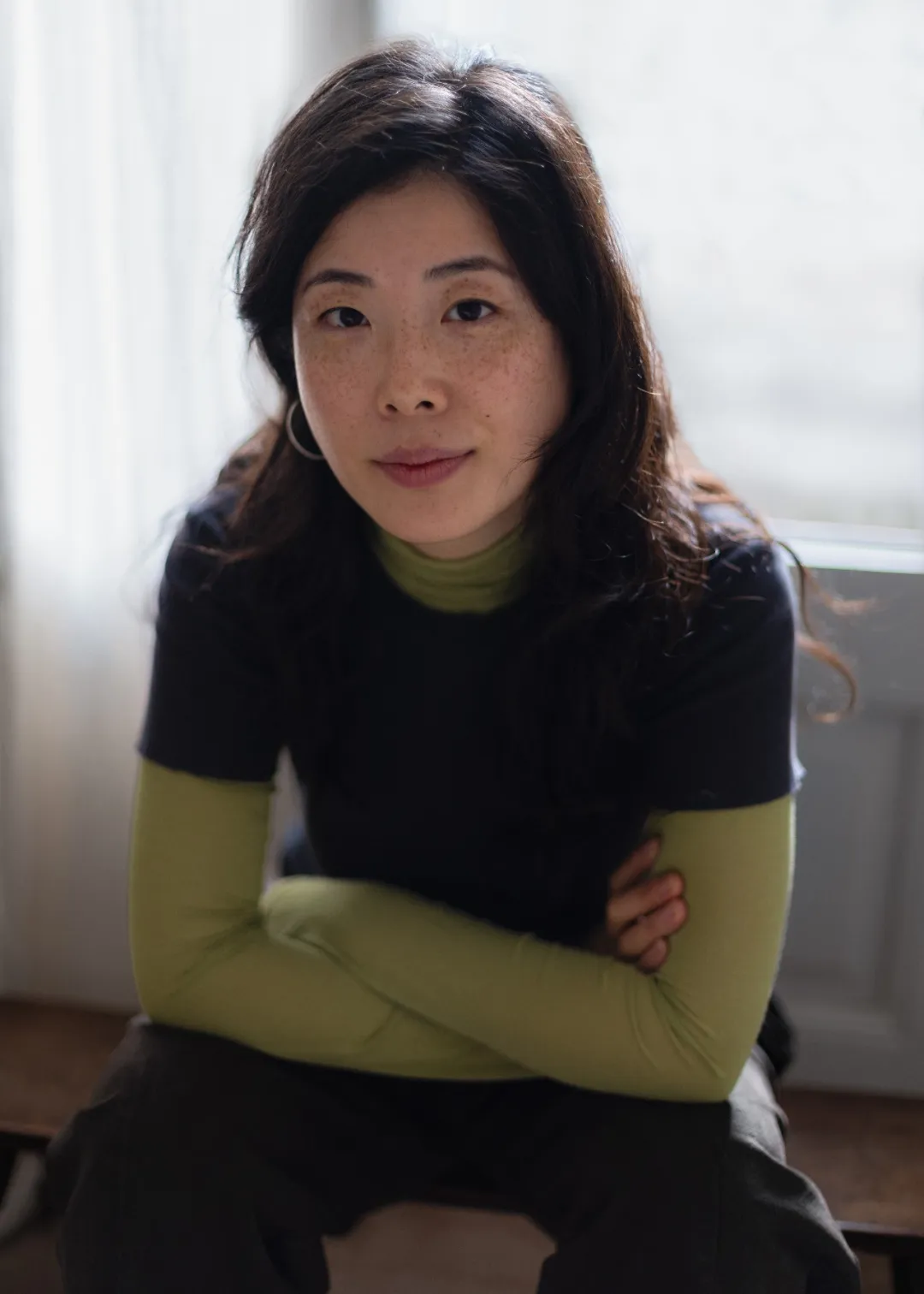
Daughter of Chinese immigrants who settled in post-Olympic Barcelona, Xisi Sofia YE CHEN (b. Barcelona, 1994) grew up between Qingtianese, Mandarin, Catalan, and Spanish. She holds a degree in Humanities and a Master’s in Creative Documentary from Pompeu Fabra University. Her cinematic work emerges from cultural hybridity and the exploration of identities shaped by migration. In 2026, she premieres her first feature film, From Dawn to Dawn, a documentary about her brother in which a gangster past and a spiritual quest coexist within the context of the uprootedness of the Chinese community in Spain.
Curatorial Notes
In her debut feature, From Dawn to Dawn, Chinese-Spanish director Xisi Sofia YE CHEN turns the camera toward her brother, A Wen, attempting to understand the first half of his life as an immigrant who joined a gang and strayed from the typical path, as well as his later rebirth as a quiet man who turns to Buddhist practice in the midst of the secular world. The Spanish voice-over is intimate yet elusive, remaining at a distance as an observer while gradually guiding us toward the protagonist’s inner tension between rupture and reconciliation.
At the temple where A Wen practices, there is no Buddha statue on the altar. It instead leaves those who enter with a single question: Who? — Who am I? Who will I become? Who could redeem me? The question speaks to A Wen’s own spiritual journey, but also to the choices we make amid the inevitable confusion, pain, and struggle of life. In the final moments, as the music of the dance hall intertwines with the chanting of sutras, the director sees A Wen becoming a Buddha. Reimagining and deconstructing Buddhist wisdom and transcendence, this is her gaze of compassion mediated through the camera.
— ZHANG Xuliang

Shanghai Daughter
Director: Agnis SHEN Zhongmin
94 min. | 2026 | Fiction | Mandarin and Dai | English subtitles
North American Premiere
Synopsis
Ming (LIANG Cuishan), a woman from Shanghai, travels alone to a rubber plantation in Xishuangbanna, where her late father was sent during the Down to the Countryside Movement. She hopes to find two people who once knew him, only to learn they have long since died. As the old production-team houses face demolition, mining and modern agriculture are quietly transforming the land. A farm officer, rural doctor, Dai elder, rubber tapper, young ecologist, and a mysterious descendant of a sent-down youth enter Mings journey one by one. Through their stories, ancient legends, private memories, and traces of history intertwine, drawing her deeper into the tropical forest.
Director
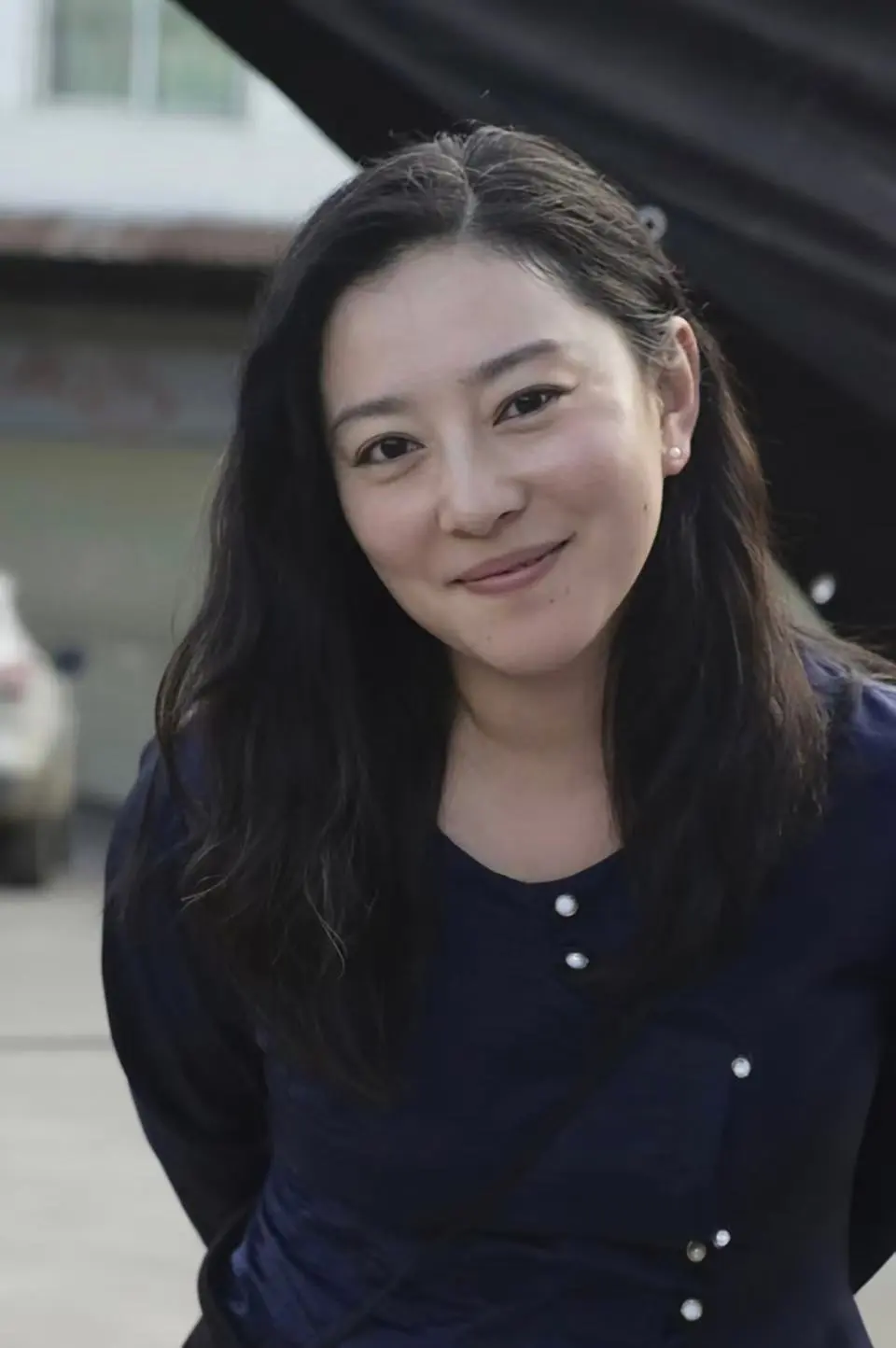
Filmmaker and writer Agnis SHEN Zhongmin (b. 1985, Shanghai, China) graduated from Tongji University with a degree in Film Directing and Screenwriting. She is the author of short story collections Notes on Shanghai Geography, Deep Simulator, and A Traveler’s Desire. She previously worked as a journalist and newspaper editor at The Bund, and later turned to cross boundary practice in contemporary art, literature and film. Shanghai Daughter is her debut film, which was selected for WIP section of SIFF PROJECT at Shanghai International Film Festival in 2025, and premiered at the 76th Berlinale. Her work has long focused on the relationship between internal consciousness and external phenomenal world.
Curatorial Notes
Agnis SHEN Zhongmin’s debut feature, Shanghai Daughter, grows out of her own family history. During the Down to the Countryside Movement, her late father was sent from Shanghai to a rubber farm in Xishuangbanna, in the southwestern province of Yunnan.
This fiction film seamlessly weaves documentary methods and oral history into its narrative. It tries to approach a history that can hardly be reconstructed in full, yet still has to be pursued. As traces are gradually erased and parts of public history become harder to reach, how can a daughter piece together the life of someone who now exists only in memory? And through him, how can she recover the sealed memories of an entire generation?
There is something distinctly feminine in the way the film approaches history. It does not try to explain everything or impose a grand narrative on the past. Instead, it listens, wanders, and sometimes allows absence itself to take centre stage.
— SHEN Wei

Street Wanderers
Director: Juan Martín HSU
90 min. | 2025 | Fiction | Cantonese, Spanish, and Mandarin | English subtitles
Canadian Premiere
Synopsis
Inspired by true events in Mendoza, Argentina, the film follows two rival Chinese gangs locked in a turf war involving extortion and human trafficking, where a single phone call can leave someone dead and local restaurants and supermarkets live in fear. Prosecutor Belenguer (Victoria ALMEIDA) leads a long-running wiretap investigation, but the language barrier leaves her team at a standstill until specially assigned interpreter Li (Chien Min LEE) joins the case and helps break it open. Meanwhile, gang member Xu (Andrés TAN HE) is quietly plotting a way out—but can he really escape the life he has known?
Director
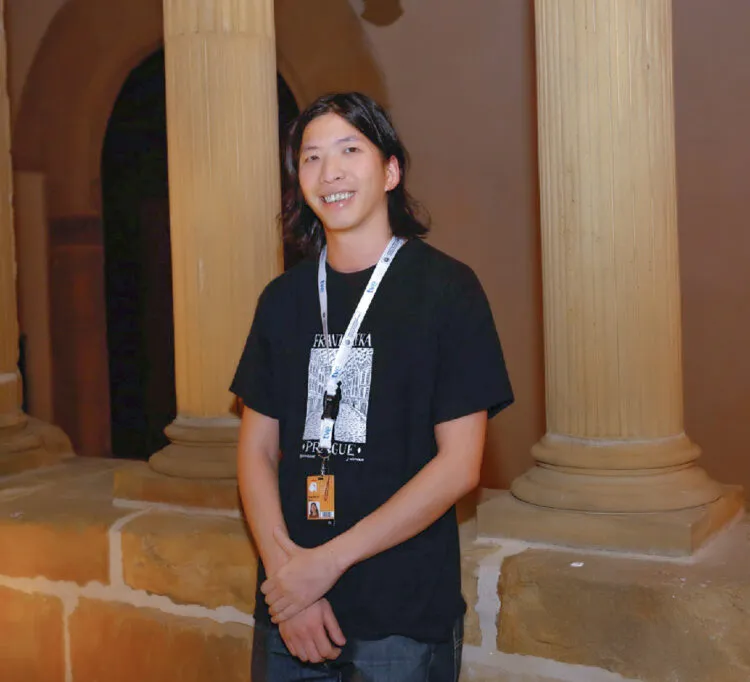
Juan Martín HSU (b. 1979, Argentina) studied Image and Sound Design at the University of Buenos Aires. His first feature, La Salada (2014), won the Film in Progress Prize at San Sebastián and screened at TIFF and BAFICI, earning the Cóndor de Plata, the Biarritz Critics Award and Best Film at Gramado. He directed the short Diamante Mandarín (2015) and the hybrid documentary The Moon Represents My Heart (2021), selected for Visions du Réel. His latest film, Street Wanderers (2025), premiered at Tallinn Black Nights, BAFICI and Guadalajara. In all his works, Hsu reflects upon and deepens the issue of migration.
Curatorial Notes
Chinese-Argentine director Juan Martín HSU’s second narrative feature Street Wanderers is set within Argentina’s Chinese community. Through an almost fantastical crime story where gangs, immigration, and Chinese restaurants intersect, it also touches on a rarely seen history of Chinese migration to this land.
The film draws on real cases involving local Chinese criminal organizations. On one level, the story follows a gang conflict, depicting how immigrant families and ordinary people get drawn into violence, competing interests, and the struggle to survive. On another, it follows a prosecutor and a Chinese interpreter investigating the case, which places this relatively closed community within the complex social, political, and cultural power relations of Argentine society. Meanwhile, the stiff, accented dialogue in Cantonese, Mandarin, and Spanish weaves together the homeland they have left behind, a “China” that can never be fully reached, and the reality they have no choice but to live in.
Street Wanderers may be the boldest selection in this year’s Fountainhead Competition. We are excited to see how such sincere filmmaking can open up new possibilities for pan-Chinese cinema.
— YANG Linsi
